
Leadership Coaching: Leadership and the young Generation Z

The digital generation that is now entering companies is different. They are highly performance-oriented and the use of digital communication tools is a matter of course. Being on the move with multimedia is routine. A generation that sees itself on an equal footing, even if know-how and work attitude are still being developed. With self-confidence, young professionals and academics are starting to do away with old stereotypes. In the following article, Sabine Machwürth gives practical tips for managers when dealing with Generation Z. Giving feedback to superiors, even unsolicited, is a matter of course. Why not research, organize and communicate privately on the Internet on the side? Business messages by SMS, voicemail, of course. Working according to a biological rhythm and not necessarily only 8 hours, but as the work requires, is not a problem. Working from home and being ready to work from home with Teamviewer and Skype is also possible. This is a generation that does not make such a clear distinction between work and private time, but is very interested in a good work-life balance. A generation that is used to making its own decisions at an early age and often approaches work in a risk-taking and experimental way, Generation Z will intensify the trend of placing significantly more value on flexibility and the flexible interpretation of everything that has to do with an orderly and structured working day. The attitudes attributed to Generation Z are:
- pronounced impatience
- Career steps are expected more quickly
- completely virtually active
- Ready and willing to take on management tasks in projects, sub-projects or teams (also at an early stage)
- Self-confident and ambitious

What does this mean for management?
Leadership is the art of consultative structuring paired with a high level of troubleshooting expertise.
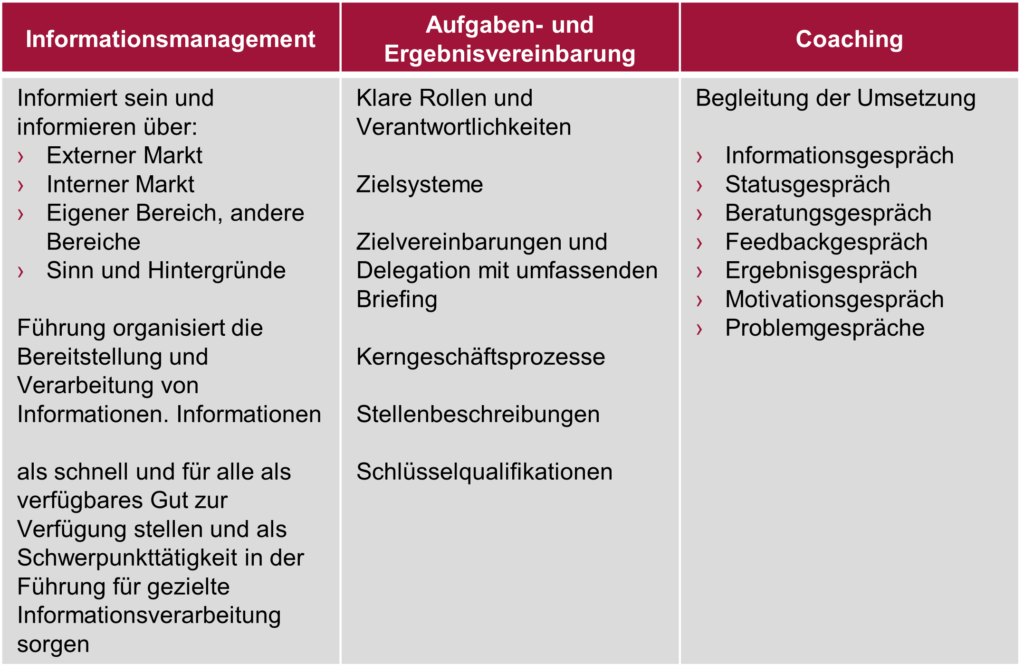
Providing structure, communicating, informing, coaching - these are the key terms for successful leadership. People leadership increasingly means consulting with employees, agreeing on goals and rules, shaping the flow and offering challenges for development. Regular consultative monitoring of work statuses and work results in dialog with the individual or team is the basis for target-oriented motivation of others. The next generation no longer sees leadership as an authority that makes decisions, but as an authority that ensures that others are able to act.
Important rules:
- Provide creative scope, responsibilities and are available for advice
- Enable decision-making authority according to ability
- Be a coach and offer challenges
- Allow for errors, be ready to rectify them or, if possible, take timely action Be up to date with the latest digital communication methods
- Allow social media, with clear rules
- Engage in social media leadership coaching yourself
- Organize regular exchanges with individual employees for consultation and status updates
- Define clear roles and decision-making structures and justify them
- Offer freedom for private matters
- Actively ask for feedback and deal calmly with unsolicited feedback
The leader as a coaching leader
Below you will find some tips on how you as a leader should organize your leadership business in order to successfully lead Generation Z with leadership coaching.
- Importance of the work and the work results for the user
- Importance of the work and work results for the creator doing the work
- Entrepreneurial value of work
- Moral or ethical value of work
- Participation in goal setting and decision-making processes
- Helping to shape your own work and working environment
- Profit-sharing (material/ non-material)
- Opportunities for change and development
- Qualification offers
- Tolerance of errors or mistakes when testing improvements or changes
- Performance-related remuneration
- Leading with goals
- Transparency of data
- Recognition and promotion by the organization
- Transparency of corporate goals
- Holistic overview of your own area of responsibility
- Information about dependencies and requirements of other areas in the company
- Feedback of work results
- Feedback as a constant basic attitude
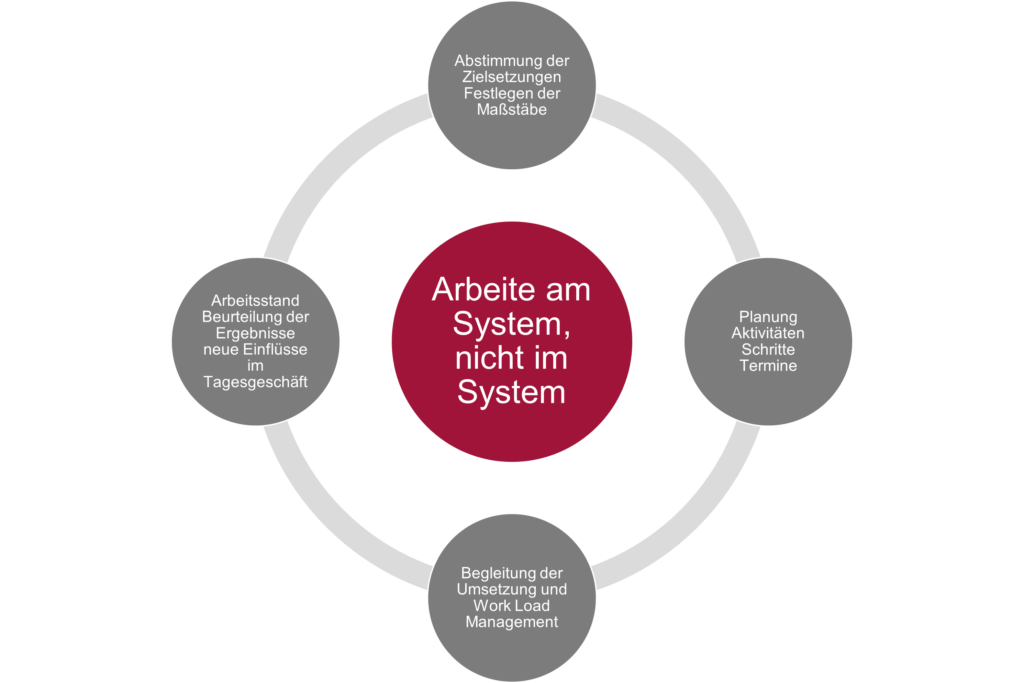
2. concentrate on working on the system - overview and not detail work
Delegation and advisory support are the key terms for working successfully in the system. You should perform as few specialist tasks as possible yourself, as this is experienced as frustrating rather than relieving (see Fig. 1).
3. pay attention to structural elements that ensure the generation of results
- Ensure team and individual objectives
- Provide comprehensive information
- Secure benchmarks and ensure performance transparency
- Set up a controlling system to monitor the results
- Make sure that the work is done in a team if possible
- Use digital communication tools
- Install a sophisticated intensive meeting management system
Types of meetings that are important and should be an integral part of everyday management:
- Department meetings, divisional meetings for updates and exchange of opinions
- Regular weekly meetings to check the workload
- Jour fixes for coaching individuals or working groups
- Target meetings to define and achieve targets
- Project meetings, working group meetings for processing specialist tasks
- Ad hoc or stand-up meetings for quick information and/or problem solving
Remember, it's not minutes that matter, it's bringing people together to achieve results, so take as few formal minutes as possible. Have you ever considered taking quick notes on a flipchart with your smartphone and sending them to your team?
4. your important management tools
- Clear target system and target agreements that are flexibly adapted (quarterly review)
- Organized and team-oriented meetings
- Key figures and reporting for benchmarking work results
- Transparent information system feedback, also as structured management feedback and employee feedback
- Performance appraisal linked to flexible remuneration and development planning
- Troubleshooting and optimization routine
- Project management and organization of CIP processes
5. lead according to the principles of leadership coaching
6. organize information
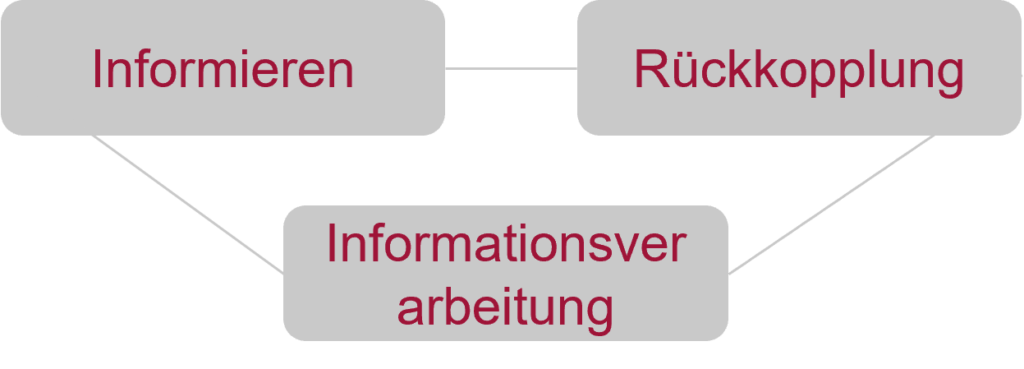
Clarify: what is communicated to whom, how it is communicated and how feedback is provided. Above all, you are expected to structure communication and, as a good networker, to be well informed yourself.
Components of an information system:
Structure information channels:
- What on the intranet?
- What about email?
- What about meetings?
- What in personal contact?
- What by phone?
- What about Whats App and other channels, for example?
Think of a "Mickey Mouse channel", i.e. a channel that can be used for small talk communication and chatting with each other.
Conclusion
It seems that Generation Z demands a lot from experienced managers. However, many of the principles described are not new. What is "new" is that Generation Z actively and self-confidently expects and demands this and, with little loyalty to a company, is also willing to change and look for alternative employers.
If you....
...clearly address expectations and services received,
...go into the dispute (struggle together to find a solution),
...encourage dissent and be able to hear what others are saying,
...ask for ideas, ...have yourself evaluated,
...deal with people not in a knowing but in a questioning attitude,
...know how to structure and use digital communication channels,
then you are well on the way to becoming a coaching leader.
WE BRING YOUR STRATEGY TO LIFE
Rethinking leadership - with Generation Z. Young professionals bring with them self-confidence, digital routines and a desire for flexibility. Successful leadership today means providing structures, giving advice and enabling development. Those who clearly address expectations, allow feedback and use digital communication channels confidently will become coachable leaders. If you are considering how leadership in your company can be adapted to the needs of Generation Z, please contact us - together we will develop approaches that will have an impact.
You can find out what this can look like here: Case studies & experience reports