
Future-oriented impulses for leadership in times of change

On the way to becoming a digital, agile organization that adapts dynamically to the rapid transformation, companies face major challenges. It is important that the change in management culture - which creates freedom for employees and enables more self-direction, motivates employees to think across departments and is based on trust and recognition - is gradually implemented.
Impulse 1: Opening up to change
Without this change, it will be difficult to successfully establish the company in the digital age. It goes without saying that the area of personnel management requires new structures and an agile understanding of leadership. Rigid management guidelines, hierarchical thinking, long decision-making processes - none of this is possible at a time when processes can change at short notice and quickly require new operational patterns. More than ever, managers need to be flexible in order to be able to react to new market requirements with their teams at short notice.
The 7th principles for a culture of success
- Work must be enjoyable
- Allow transformation
- Everyone always gives their best
- Everyone leads themselves in complete autonomy
- Questions are my potential - not knowing is my resource
- The power of success - telling stories
- Be optimistic!
Gloger, Boris/Rösner, Dieter: Self-organization needs leadership, Hanser Verlag, 2017, p. 115 ff
Impulse 2: Blended Workspace - How do we want to work in the future?
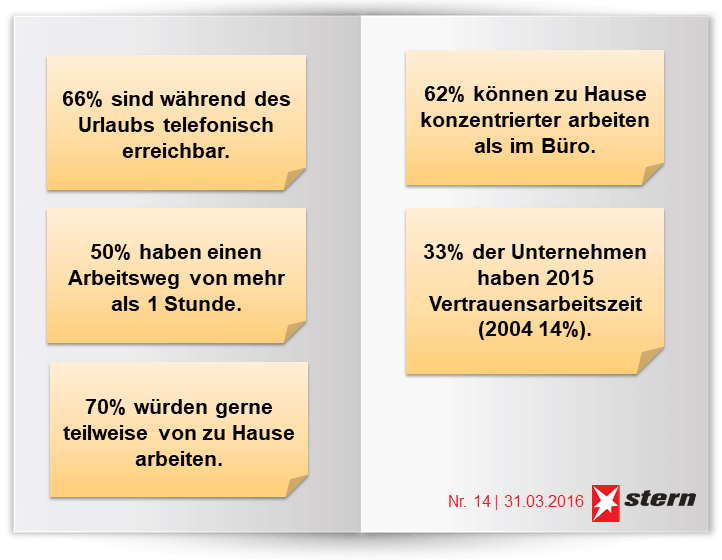
The workplace of the future is also facing a major change. Work as we used to know it has already changed dramatically and the shift is continuing towards the blended/digital workspace. New forms of collaboration are emerging that are challenging the old structures. Leadership is increasingly taking place at a distance and is increasingly shared, which means that managers have to fulfill changing roles within their teams. Employees are also working more and more in digital teams and flexible structures - the latest work status and all work files are always available at any location and on any device.
The workplace of the future offers greater efficiency, flexibility and comfort. But here too, there are challenges at various levels:
...for employees
The different mix of generations of employees in companies brings the challenge of different levels of knowledge in dealing with digital media. There are also different ways of dealing with working hours and an understanding of a sense of duty and hierarchical thinking. Working with a mix of generations should definitely be encouraged here. An examination of and support for working in flat hierarchies, flexible structures, virtual teams, a digital workplace and self-management skills are essential.
...for the company
Organizational changes and new management concepts are also necessary for companies and managers. Agile structures and the agile mindset do not come out of nowhere and must be planned and implemented with in-depth change management.
New structures must also be introduced in the HR department and opportunities exploited - how should employees be organized and at the same time supported in their self-management, how can the emerging flexibility of time and place be used, how do you operate in a generation mix?
...for IT
One of the biggest challenges for the modern workplace is IT. This is because technical IT structures need to be further developed and newly created, and the associated processes and work steps need to be fundamentally revised. New management tools, work processes, cloud applications and remote desktops will gradually change the traditional workplace and transform it into a blended/digital workspace. This change should also not be underestimated and should be tackled with professional support.
Impulse 3: Do not misjudge fields of action in generation management
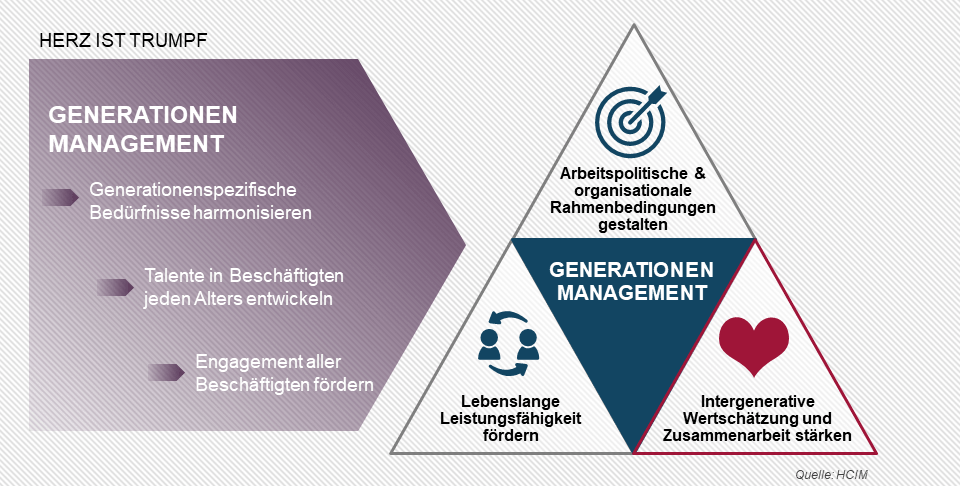
Each generation brings general and work-related behaviors to the workplace. Today, three generations work in companies at the same time: Baby Boomers (born 1956-1955), Generation X (born 1966-1980) and Generation Y (born 1981-1995). But Generation Z (born 1996-today) is also slowly establishing itself in the labor market. As different as the decades are in which the various generations were born and grew up, as different are their approaches to tasks, their use of new technologies and their social interaction. These generations need to be managed by harmonizing the generation-specific needs, developing and utilizing the talents of employees of all ages and promoting the commitment of all employees.
An agile leader gives their team direction. The task of leadership is to shape and promote cooperation, collaboration and exchange in such a way that the productivity potential of mixed-age teams can be optimally utilized in the future.
Leadership between the generations - a challenge for every leader (introduction)
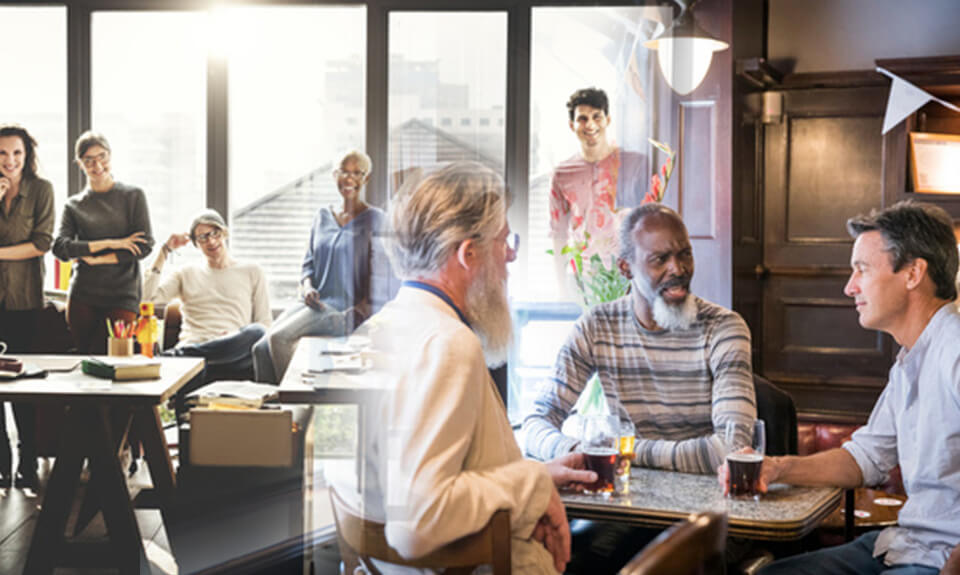
- In working life, "the young" meet "the old" and have to achieve work results together.
- What does it mean to lead different generations in a work team? What challenges arise for the leader?
- The following free podcast will introduce you to this topic.
WE BRING YOUR STRATEGY TO LIFE
Leadership in transition - orientation for the future. The path to a digital and agile organization requires not only new structures, but also a changed leadership culture that creates trust, enables self-direction and promotes cross-divisional thinking. The workplace of the future is becoming increasingly digital and flexible, with teams working together virtually and across generations. For leadership to succeed, agile concepts, professional change management and the ability to harmonize different needs are required. MTI supports companies in successfully shaping this change - from healthy leadership to cross-generational concepts. If you are considering how you can future-proof your organization, please contact us - together we will develop solutions that make an impact.
You can find out what this can look like here: Case studies & experience reports