
Sleep better! - Why the right sleep hygiene can help you get more sleep, relax
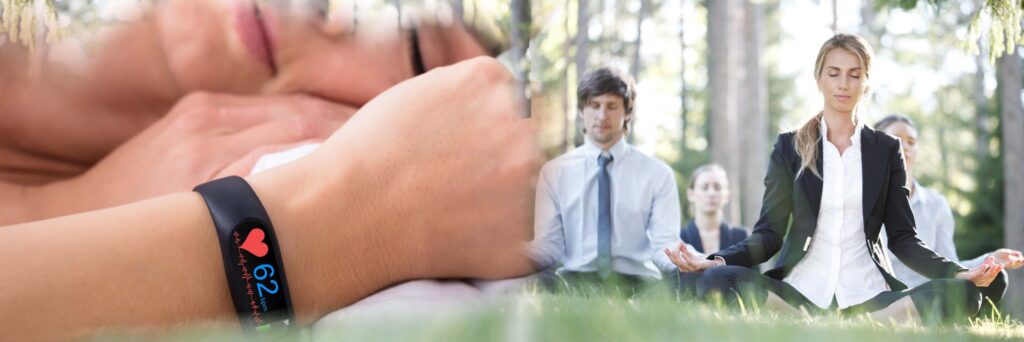
What do sleep, rest and relaxation have to do with your own health and BGM? A lot. However, many people are not aware of this connection or only become aware of it when serious health consequences have already crept in. Knowing about the effects of sufficient sleep and relaxation is one of the basics of personal health and should therefore also be an essential part of the BMG. Employees should ensure that they get enough sleep, relaxation and rest, just like their managers. In times when it has become almost "fashionable" or "normal" to pile up overtime and be on call at the weekend, it is difficult to develop the right awareness for a healthy end to the day. Even in everyday life: always trying to please everyone and wanting to "dance" at every party doesn't exactly create relaxation and recuperation. We have a few tips to help you improve your personal sleep and relaxation balance.
Sleep, rest and relaxation in BGM - managers are role models
The problems of managers are hardly any different from those of employees, as both parties are facing an increasing workload and it is becoming more and more difficult to reconcile work and leisure time. This is precisely why supervisors and managers should set a good example. Skipping a break because there's too much to do? No. Small breaks between work-intensive hours are a great way to relax and reduce stress levels. Sending emails or accepting orders after work? No. The likelihood is high that employees will take it easy and stay in the office until well after closing time or try to complete work orders after official working hours.
Many managers underestimate this interaction and their own influence and should recognize that they should reorganize or redistribute work in order to avoid stress for themselves and their employees.
BGM and healthy sleep - tips
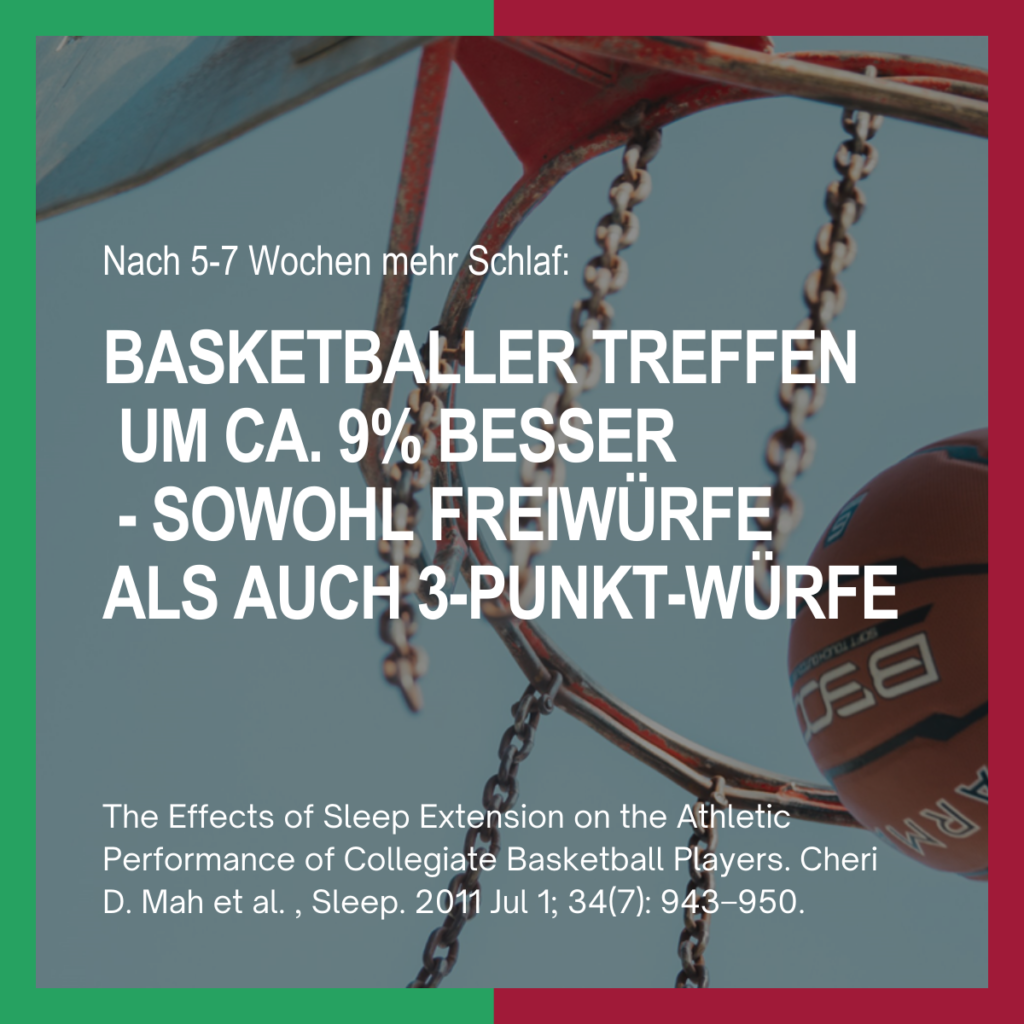
Sleep is not just for rest, as an OXFORD study inSleep is more than rest for plasticity in the human cortex shows. The study shows that the state of sleep is unique and cannot be replaced by periods of rest. Sleep has a positive effect on performance, mood, health and stress. Healthy sleep also has a positive effect on your own health, as numerous other studies have shown.
How do you ensure healthy, restful sleep?
Introduce regular rituals to help you find healthy sleep:
- A good sleeping environment: close windows (read why here), darkened and quiet room (alternatively: noise-insulating earplugs and sleeping goggles)
- No heavy meals before bedtime so that the body is not busy expending its energy on prolonged digestion
- Exercise promotes healthy sleep, introduce regular walks into your routine
- Exercise also helps the body to reach a state of rest more quickly (but not before going to bed, exercise before sleep makes it more difficult to wind down - there should be at least three hours in between)
- Avoid stimulants (caffeine, nicotine, ...) before going to bed
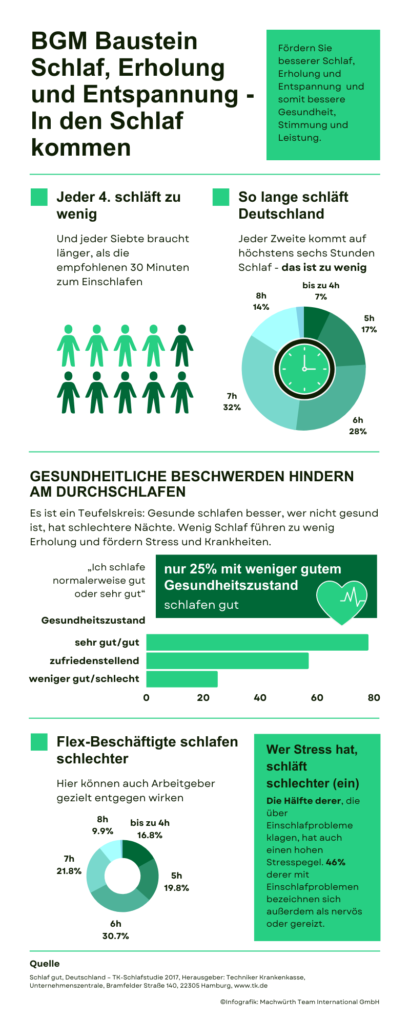
- Every tenth person is disturbed by their cell phone or smartphone while sleeping - put it away, preferably in another room, or switch it off for the night
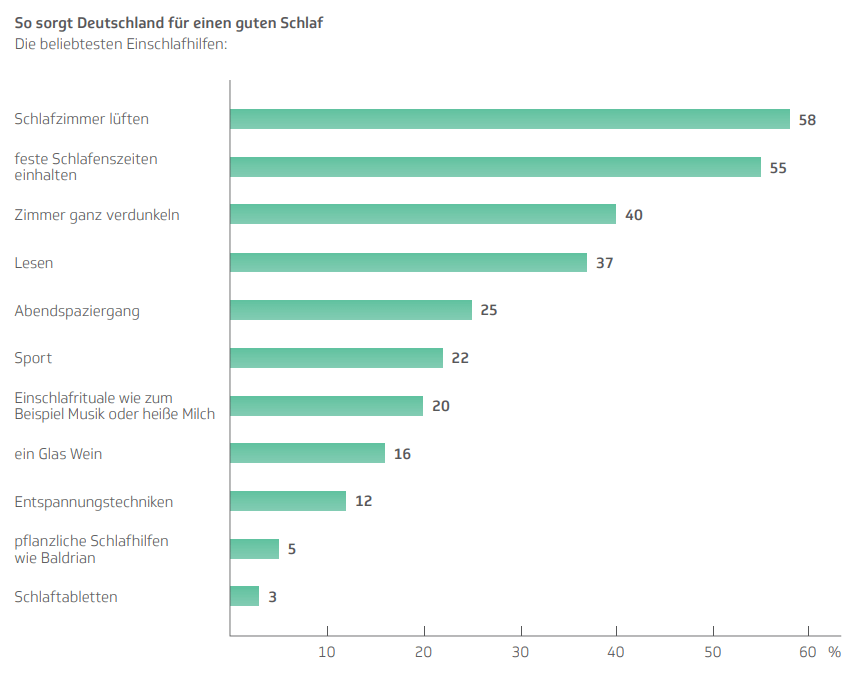
This helps Germany fall asleep | Sleep well, Germany - TK sleep study 2017
How can BGM measures promote healthy sleep?
Of course, bosses cannot lie in bed with their employees or coach them before they go to bed. As with other components of occupational health management, information and education are important and useful and make people aware of and understand issues that they may not have thought about before. Guidebooks with the aforementioned tips on sleep quality can make a big difference. However, targeted measures in occupational health management should also focus on how to help employees achieve healthy sleep and thus better health, rest and relaxation.
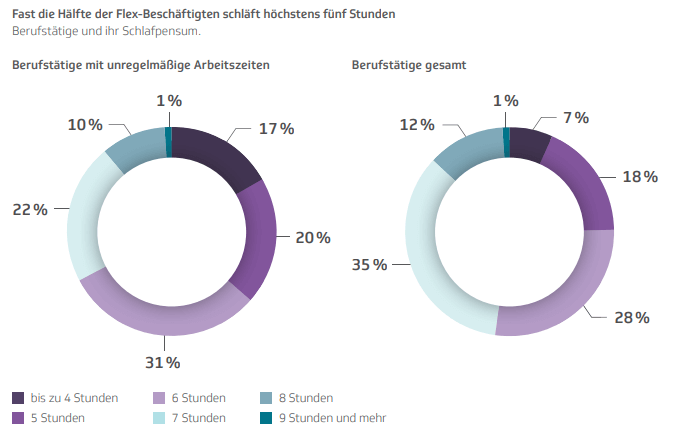
The results of the TK study Sleep well, Germany show that flex workers in particular (e.g. shift workers) do not get the recommended amount of sleep and a good quality of sleep. The TK therefore recommends BGM measures for the prevention of both behavioral and structural factors for healthy sleep: "These include, for example, ergonomic shift systems with forward-rotating shifts and sufficiently long blocks of free time, especially after the night shift phase, childcare options, shuttle services aligned with shift schedules, etc.". Information on this can be found in the "Shift work" brochure published by the technicians.".
Rest and relaxation - tips for company measures
Rest and relaxation at work ensure better health? Just a few minutes of relaxation a day can help you to live a more relaxed and healthier life. Numerous studies have shown that health and stress are closely linked to sleep quality, rest and relaxation. When you are rested and relaxed, you are more resilient and don't get thrown off track so easily. You have more creative ideas and are less skeptical. In general, your ability to concentrate increases and you can solve problems more quickly.
More mindfulness in everyday life
Be mindful of your daily routine and your activities. Leave negative autopilots behind. Consciously take breaks and focus your attention on the moment. This provides relaxation and reduces stress, slows you down, can alleviate depression and strengthen the immune system, as studies have shown. Mindfulness seminars and training courses for employees bring great success according to participants.
Learn more about helpful techniques for meditation and mindfulness in business in our KnowHow Coffee with Manuel Shipwood
Conscious time for yourself
Consciously switch off without using your cell phone or social media and regularly take time out just for yourself. These time-outs should be planned consciously - they bring more balance and relaxation and reduce stress. A customer is late or a planned task is completed more quickly and you have gained time? Make conscious use of such moments for yourself instead of scheduling even more tasks. Tips for your time-out: Me-time: finally balanced with time for myself.
In the office and after the office
Make sure you exercise regularly, get up at least every 20 minutes and loosen up. Do small relaxation exercises in between or take short breaks for 90 seconds instead of spending hours cramped up with tasks. You can also create space for rest and relaxation with the right time management. Find out more in Sabine Machwürth's "On the small stuff and the big chunks". Don't go straight home after work. Gather other impressions by taking a stroll through the city, going shopping or doing some other distraction. This allows your brain to gather new stimuli and makes it easier for you to switch off.
Other relaxation techniques:
Progressive muscle relaxation
Progressive muscle relaxation is one of the best-known relaxation techniques and is based on alternately tensing and relaxing individual muscle groups. You work on all the important muscle groups one after the other. This allows you to reduce stress and release tension.
Autogenic training
This relaxation technique originates from self-hypnosis and works with so-called autosuggestive formulas. Autogenic training requires a little practice and regular training until you have completely mastered the technique. It is therefore less suitable for direct stress situations. In the long term, it can help with sleep disorders, depression, concentration and anxiety disorders.
Meditation
Spiritual practice is known for its calming and centering effect. Your thoughts come to rest during meditation. This allows you to reduce stress and relax your mind. There are many different forms of meditation. You can do them walking, sitting, lying down and standing. There are even dancing meditations.
Breathing exercises
When you are in a stressful situation, your breathing becomes shallow. If you learn to influence your breathing, you can also influence your stress level. Breathe calmly and deeply, relax. This is why breathing exercises are particularly suitable for relaxation in acute stress situations.
Movement
Exercise is probably one of the most effective techniques for reducing stress and relaxing. It is important that you accept your limits and do not make your training too strenuous, otherwise you will increase your stress levels instead of reducing them.
Sauna
Regular sauna sessions can also contribute to relaxation. A visit to the sauna strengthens your immune system and relaxes your body and mind. Steam and heat ensure that your body is purified and toxins are removed from the body.
Relaxation music
Relaxation music is particularly suitable if you want to close your eyes for a moment and switch off for a while. This allows you to relax with little effort.
Massage
Massages create short breaks in everyday life. A massage can greatly improve your well-being. Blockages can be released and your muscles loosened. You can remain completely passive, as the masseur alone takes care of your relaxation.
Smile
A smile releases endorphins and natural painkillers. Your muscles can relax and you are happier. Stress hormones are lowered.
Of course, all of these relaxation techniques require in-depth training and an introduction to their implementation and effects by experienced specialists or providers. The deepening of these techniques should not be missing in BGM and is therefore also part of the basic building block for your own health in the BGM program "MTI Move for Health".
Health is fun!
If you take good care of yourself, you develop self-responsibility and can be proud of yourself. Recognizing yourself and treating yourself well is the basis for treating others well, respectfully and appreciatively. If you are healthy, you will be physically, mentally and emotionally fitter and more agile in life and more resilient in challenging situations. So be aware of how you treat your body, make sure you get enough sleep, rest and relaxation. You will notice that you are much more rested, balanced and efficient during the day.
For further reading:
How much sleep is healthy and what happens during the sleep phases?
https://www.aok.de/pk/magazin/wohlbefinden/schlaf/schlafrhythmus-tipps-fuer-einen-gesunden-schlaf/
Sleep well, Germany - TK sleep study 2017
Sources:
Sleep well, Germany - TK sleep study 2017, publisher: Techniker Krankenkasse, head office, Bramfelder Straße 140, 22305 Hamburg, www.tk.de;(https://www.tk.de/resource/blob/2033604/118707bfcdd95b0b1ccdaf06b30226ea/schlaf-gut-deutschland-data.pdf )
https://www.aok.de/pk/magazin/wohlbefinden/achtsamkeit/achtsamkeit-im-hier-und-jetzt-sein/
https://www.aok.de/pk/magazin/wohlbefinden/achtsamkeit/me-time-um-sich-selbst-kuemmern/
WE BRING YOUR STRATEGY TO LIFE
Restful sleep is more than just a nightly routine - it is the basis for health, performance and inner balance. Those who consciously pay attention to sleep hygiene create space for relaxation and reduce stress in everyday working life. Short breaks, clear boundaries between work and leisure time and mindful use of your own resources not only improve your personal well-being, but also cooperation within the company.
You can find out what this can look like here: Case studies & experience reports