
Digital transformation in personnel development - an interview with Hans-Peter Machwürth

We are almost "used to" the rapid pace of digital transformation and are quick to incorporate changes into our everyday lives. But what is the status of training and development in the workplace? What is the significance of the expansion of blended learning approaches, from an individual digital coach for each employee to "digital learning for all"? The MTI study "Digital transformation as a challenge for HR development" provided interesting results on these and other questions. This was a good reason for Dr. Melanie Hasenbein to invite our Managing Director Hans-Peter Machwürth for a chat.

Hans-Peter Machwürth
Managing partner of all companies in the MTI Group
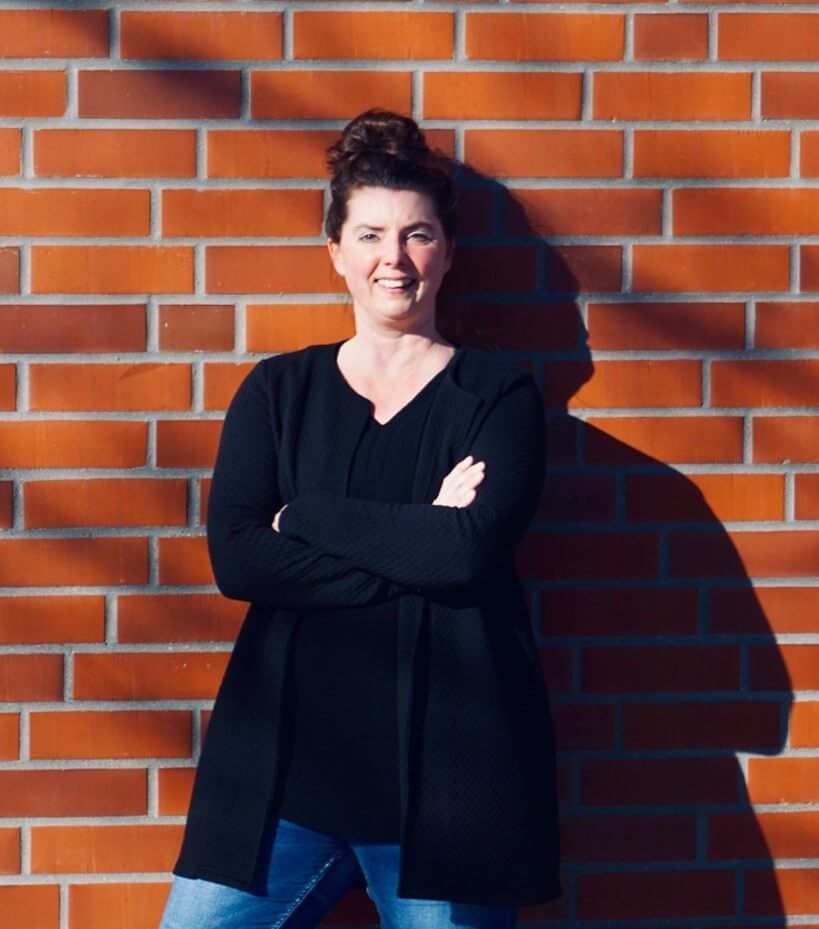
Dr. phil. Melanie Hasenbein
Diploma in education, doctorate in educational psychology, consultant and coach for change and digitalization in Munich
She became interested in digital opportunities in a professional and scientific context early on. This began during her studies and developed further during various professional positions in both corporations and medium-sized companies as well as through work in consulting and universities. Today, she has been self-employed for around ten years and also passes on her knowledge in the university sector.
Inspired by the technological possibilities in our digital world, she takes readers on a journey into the psychology of digitalization on her blog "Journey of Digital Psychology". She explores the impact of digitalization on people and how they can play an active and self-determined role in shaping the new world of business and society. To this end, she interviews people in various professional and scientific contexts and sheds light on and discusses the different perspectives.
The interview
Dr. Melanie Hasenbein: What are the main focus areas of Machwürth Team international?
Hans-Peter Machwürth: We have six pillars in which we work. Three in the area of personnel development and three in the area of organizational development. Leadership & Management and Sales & Service are the two main pillars of personnel development, each accounting for a third of sales, while the third pillar is dedicated to business skills. In the organizational development area, the work and consulting areas are change, team development and lean management. We cover these work and consulting topics both in Germany and internationally. We generate around fifty percent of our turnover in Germany and fifty percent in international projects. One growth area is cooperation with organizations in the non-profit sector, e.g. public authorities and administrations. In these organizations, the time is now ripe to take up topics that have already been dealt with in the business world. The topic of health is also becoming more important.
Dr. Melanie Hasenbein: And what kind of customers do you have, both large corporations and SMEs, or is there a focus?
Hans-Peter Machwürth: It's a pretty mixed bag. For example, we have major customers from the automotive sector, particularly suppliers; we are currently working actively on the topic of dealing with digital transformation. The aim is to familiarize the plants and managers at worker level, such as foremen, shift supervisors and production managers, with the issues of digitalization and the changes that are coming to production in terms of work design. We have carried out a pilot project in Germany and are currently implementing it in Mexico. It is very exciting and interesting to see that people are talking about digitalization while still working with very analogue learning methods, because the production areas are not yet set up in such a way that all skilled workers have access to digital tools, e.g. laptops, smartphones, tablets, in order to implement digital learning formats. As the mindset in production also tends to favor adaptability, we have "normal" notebooks, for example, which are designed to encourage self-designed learning with topic-related stickers and are very well received. It sometimes takes creativity to master the tension between conceptual ideas and practical implementation - aspiration and reality. Especially when there are also cultural differences to manage.
Dr. Melanie Hasenbein: What are you already doing yourself on the subject of digitalization in the learning sector? What are you working on?
Hans-Peter Machwürth: We have an IT team ourselves and we have gradually digitized our processes. This means, for example, that we no longer work with paper feedback after training sessions, but instead use digital seminar feedback. And we have a tool called MTI Dialog, a digital brainstorming tool. It allows you to communicate with the participants before the training and ask about their interests. In the past, we had a pinboard and used the first few hours of training for this. Today, we do this digitally before the training. We have also set up an LMS (Learning Management System) for our customers. This is where we post the cognitive content before face-to-face training, e.g. a video or podcast. This allows us to separate cognitive content from behavioral training with feedback. We thus anticipate the knowledge content digitally. Today, there is less need for "smart trainers" to present the knowledge to the participants, as the knowledge can be found on the internet or elsewhere. Instead, more time is given to coaching participants at the behavioral level in classroom training and providing them with individual learning support. We have developed a modern and sustainable learning design for this purpose. In the first step, the leader should conduct a preparatory discussion with the participant. In the second step, learning takes place on the LMS with self-study material. In the third step, we organize a web meeting where we reflect with the participants on the things they have been provided with. We bring the participants up to the same level and network them with each other. Then there is usually a pre-work session where the participants are asked to bring in a case from their daily business, which we then continue to work on in the face-to-face training. After the face-to-face training, there is a transfer task and then a follow-up web meeting. We can also use learning nuggets to regularly "feed" learners and participants with content, tips and suggestions via smartphone. And at the end, there should be an evaluation discussion with the leader if possible. This gives us several learning loops and enables us to achieve a different level of sustainability. This pragmatic approach of combining different tools and methods as a form of blended learning is also easy for HR developers to handle.
Dr. Melanie Hasenbein: And do the participants do that? Do they study the learning material before the classroom training?
Hans-Peter Machwürth: It usually works quite well. If you make it restrictive, then you always do a knowledge check and you are only allowed to come to classroom training if you have passed it. However, sometimes it's not really possible to enforce something like this and the question is also whether it promotes a willingness to learn and supports companies in the development of qualified employees. This also brings us to an important point. I believe that modern learning and its possibilities don't just mean mapping learning digitally. The question is: what kind of learning culture do we have? And as long as we have a learning culture that says: "I go to a seminar and have something taught to me", then we have a learning culture that does not yet make use of digital possibilities. So learners should actually use everything that is cognitively available on the global web to prepare for their learning and they don't need a trainer who presents them with great slides for expensive money. And after six weeks, ninety percent of the knowledge is gone, statistically speaking. That's always the discussion with the companies, that you discuss such learning designs with the companies. Of course, we also get a lot of inquiries from customers who simply want to buy traditional training courses. When I come to them with more modern learning designs, it's often too complex. So we also lose some orders because we are a bit provocative with sustainability and it is often seen as "bloating". We also no longer have trainers, but learning facilitators or learning coaches. The traditional lecturer is outdated.
Dr. Melanie Hasenbein: That's interesting!
Hans-Peter Machwürth: Behavior ultimately comes about through reflection, feedback, concrete experimentation and discussions, through thinking about the issues yourself. This doesn't happen because a trainer stands at the front and gives beautiful presentations.
Dr. Melanie Hasenbein: You have now conducted the study on digital transformation as a challenge for HR development. What motivated you to conduct this study? And what was the outcome?
Hans-Peter Machwürth: My wife was at the trade fair in Hanover and brought back inspiration. A colleague was in the USA and also brought back ideas. We discovered what is possible and what is already being done. There are huge differences. We said to ourselves: "We have to see where we are in Germany" and then wrote to companies and received 145 responses. One thing you can say is that the blended learning approach has established itself. If you then look at where companies stand in the digitalization of forms of learning, there are very few that are really fully on board as digital leaders and if they are, they tend to be small rather than large companies. Only about half of the companies use an LMS. My guess is that in large companies, the requirement to invest in digital learning always has to be German, very perfect. When I look at what's happening in China, they do it very simply. You are handed a smartphone and a specialist is placed at a flipchart and told: "Explain to your employees what you are doing and how, and it shouldn't take longer than five minutes". Then you already have a specialist video that you can distribute. And with us, an agency is commissioned. It has to be one hundred percent. It also has to be wonderfully spoken. There can't be any stuttering in it and then it all becomes very long and very expensive and you slow down the development because you have the demand for perfection. A great deal of effort is put into it and then it doesn't come to fruition because by then the content is already out of date again. We need to become much more pragmatic. And another handicap, as we also saw in the study, is that most HR development departments have too few IT resources or cannot access enough IT resources. And that creates a bottleneck.
Dr. Melanie Hasenbein: What significance will face-to-face learning still have in the future?
Hans-Peter Machwürth: When it comes to feedback and looking at communication patterns, you can't do that purely cognitively. You have to make that tangible or also the topic of conflict management. So wherever people work together in systems, so to speak, you need presence. I think that in five, ten, twenty years' time, it will be quite normal for people to acquire the knowledge they need for their work themselves. They will then be supported by feedback systems and coaching. It makes no sense to teach purely cognitive content in training.
Dr. Melanie Hasenbein: Do you also believe that topics such as virtual and augmented realities will make inroads? Will there be a breakthrough in the training sector or not so much?
Hans-Peter Machwürth: I think so. We have just completed an onboarding process for a client where we give applicants a virtual tour of the office before they sign the contract, show them their workplace and introduce them to their colleagues. That is a first preliminary stage. In my opinion, podcasts or video clips with work topics and cognitive content are not being used enough at the moment. This is a form of learning that I can really use autonomously, for example on the train. In my opinion, this potential is not yet being exploited to the extent that it could be.
Dr. Melanie Hasenbein: What will personnel development look like in the future? How does it need to be set up?
Hans-Peter Machwürth: My thesis, which I have been developing for years, is that personnel developers, organizational developers and controllers should become an internal consulting unit that supports managers. The focus would then be on figures, data and facts on the one hand, processes and changes on the other and people on the third. It would be best to have a mixed team that advises the managers together. Then you would have the necessary quality.
Dr. Melanie Hasenbein: Does this mean that cooperation within the company with the relevant departments must be different?
Hans-Peter Machwürth: Yes, and then you also have to take IT into account.
Dr. Melanie Hasenbein: What can external parties do then? How do you think you can provide meaningful support?
Hans-Peter Machwürth: Yes, there are three starting points. One is the resource problem, when the internal departments in the company have too few resources available. Secondly, it's a supervision issue, where you can supervise internal departments and thirdly, it's about co-management, where you say: "We'll do an analysis of the current situation together and then develop concepts and implement them co-creatively".
Dr. Melanie Hasenbein: What else would you like to say at the end of the interview with regard to digitalization?
Hans-Peter Machwürth: Well, I think we need to clean up the German thoroughness and simply do things pragmatically and try things out, develop them further, go into the next learning loop. Just do it and be creative and not wait for the last board or management decision, but really try things out. I think that's when the culture changes. The young people who follow have no stress at all.
Dr. Melanie Hasenbein: Thank you very much for these exciting insights.
Hans-Peter Machwürth: With pleasure.
WE BRING YOUR STRATEGY TO LIFE
Digital transformation in learning - practical and sustainable. Our study shows: Blended learning and digital tools are rapidly gaining in importance, while traditional face-to-face seminars are increasingly being supplemented by a modern learning culture. With innovative concepts such as learning platforms, digital feedback systems and individual learning guides, we create formats that convey knowledge efficiently and develop behavior in a targeted manner. In this way, we support companies in making their employees fit for the future and effectively shaping learning processes. If you are considering how you can successfully digitalize your HR development, please contact us - together we will develop solutions that make an impact.
You can find out what this can look like here: Case studies & experience reports