
On the way to the perfect coaching process? - The coaching units
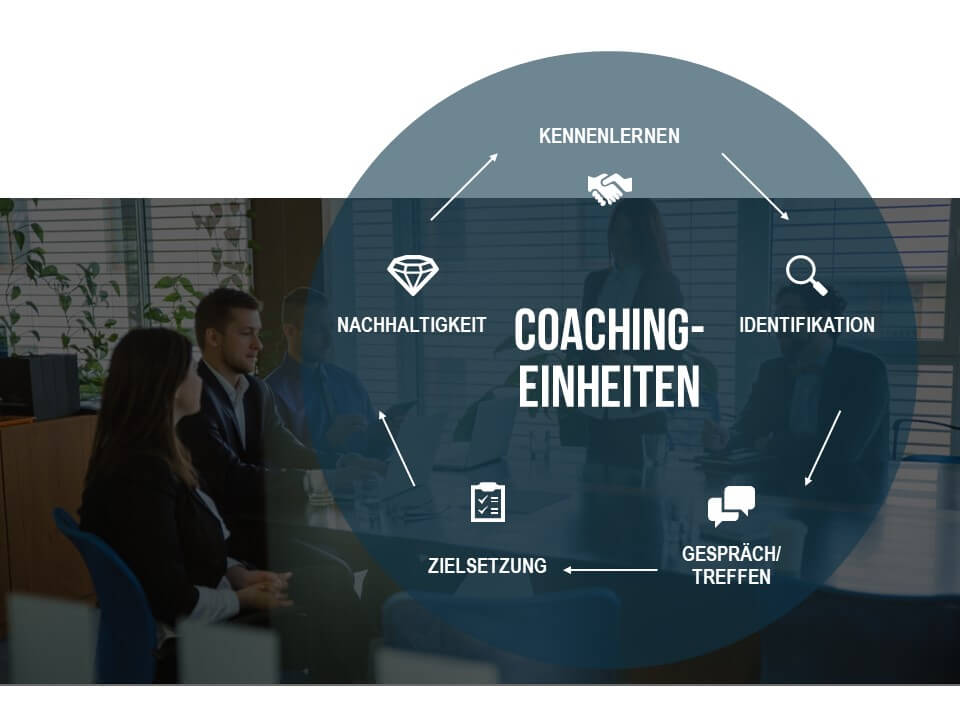
Have you found the right coach for you in a coach pool, database or other source? Then you can soon get started with your first coaching sessions. Before that, however, there are two important steps in a good coaching process: getting to know each other personally and identifying the problem. This is followed by the coaching sessions in 3 steps: discussion, goal setting, sustainability.
Get to know each other personally
The first meeting takes place. Together, coach and client consider what the client would like to change. The coach transforms the issue into coaching goals - goals that will help the coachee progress in their career.
Only then does the coachee decide whether or not business coaching makes sense.
An initial meeting is arranged to clarify whether the foundations for a coaching relationship (voluntariness, discretion, mutual acceptance) are in place. The focus here is still on mutual exploration. The client states their expectations and the coach describes the possibilities and limitations of coaching. If necessary, an initial view of the problem is taken, diffuse problem situations are analyzed and specific problem areas are defined for the first time.
Identification
What defines me? What has shaped me? What personal strengths, weaknesses and wishes characterize my everyday working life?
The basis for successful coaching is the discovery of dreams and needs that may previously have been unknown, as well as the identification of personality.
There are many tools and methods that will help you to gain new insights.
Also known as the analysis phase and motivation clarification.
Clarifying the current situation and defining goals and wishes are now important. What should be changed? A detailed behavioral analysis helps to reflect on previous behavior and agree on the goals for change.
After identification, the actual coaching units begin.
Unit 1: The conversation/meeting
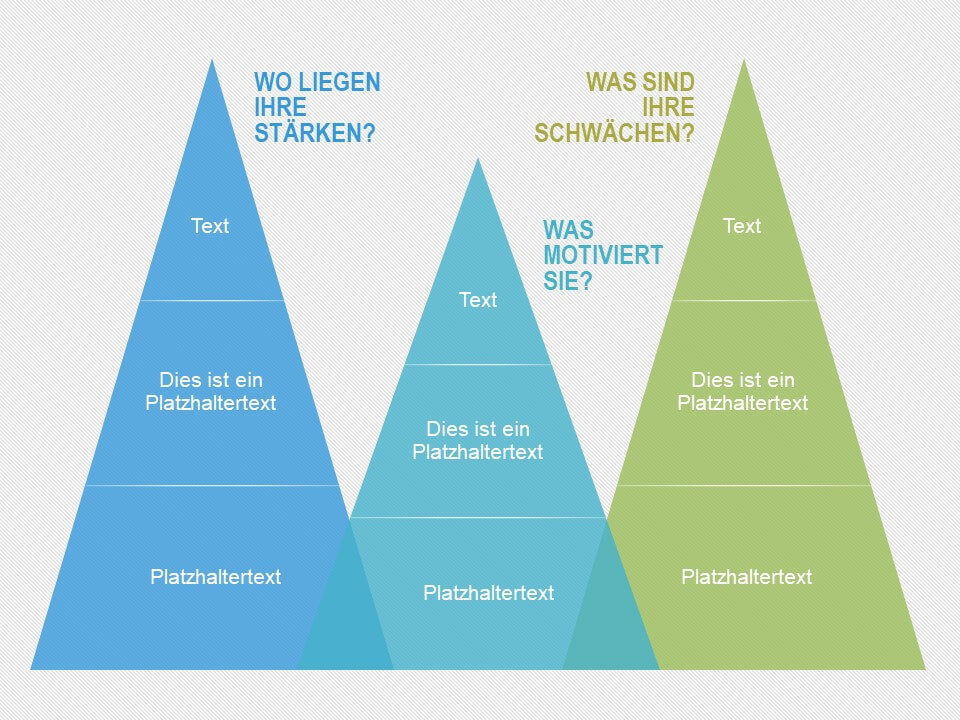
Personal coaching sessions are essential. Together, coach and coachee interpret, compare, evaluate and prioritize the problems, strengths and motivation. The coach puts the different pieces together. This helps the client to get a clear view of things and opens up new possibilities.
This structuring can take the form of three pyramids (see Figure 1.).
A joint concrete problem analysis is carried out. The most important problems are discussed ("Where exactly is the problem?", "When does it occur?", "How would you recognize that the problem has been solved?") and an individual work plan is drawn up together.
Unit 2: Goal setting/problem solving
The coachee should now ask themselves the following questions: What do I want to achieve? What goals do I want to realize? What skills do I want to work on?
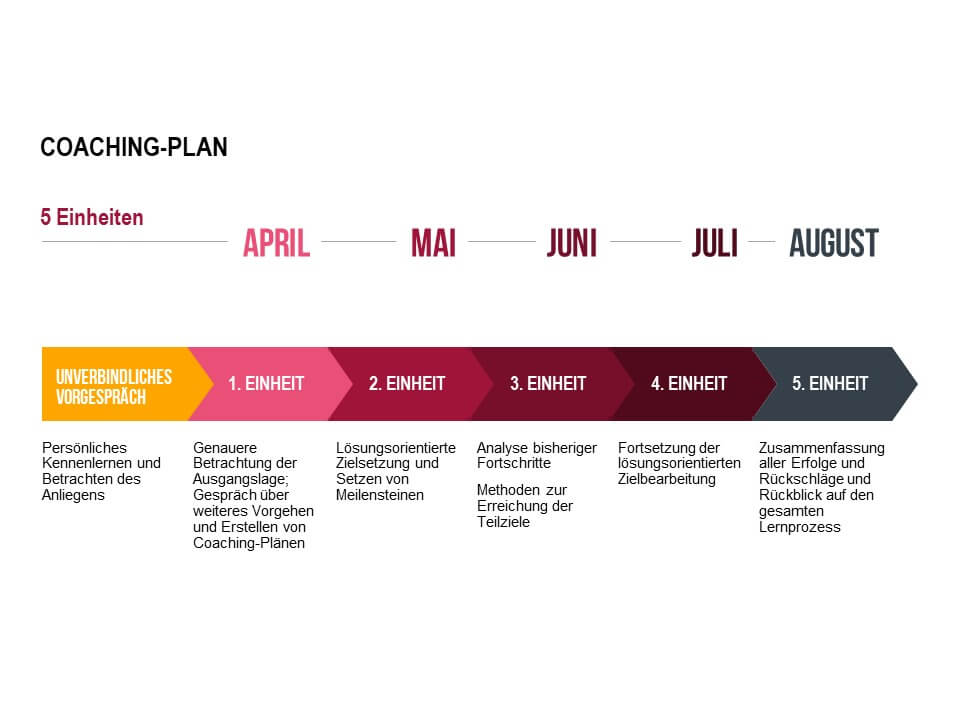
The coach and coachee talk together about professional goals, set milestones and develop coaching plans. A coaching plan can consist of several coaching sessions (see Fig. 2 Coaching plan).
Several possible problem solutions are developed and evaluated. Advantages and disadvantages are weighed up, e.g. in simulations that are played out, and the client decides on the realization of the various problem-solving strategies. If necessary, the coach points out perceptual blockages (e.g. "operational blindness") and opens up new perspectives. Suggestions are made and feedback is given, which the client can accept or reject without losing face.
Unit 3: Sustainability
It is the coachee's turn.
He implements the measures developed in his day-to-day work and benefits from his strengths and newfound energy. Even if this will require some effort and discipline, he will notice the first changes.
The client tries out the problem-solving strategies and reports the results in the coaching session. Any difficulties and successes are discussed and the coach gives feedback. If there is no improvement, the client goes back to unit 2. This ensures that the development and success of the measures are constantly evaluated and readjusted.
In order to continue to be successful in the future and to ensure sustainability, a further discussion (or further discussions) after six months and/or a year is extremely useful.
New obstacles that have arisen are discussed, previous successes are reviewed and new measures are developed to keep the client's success rate permanently high.
The entire coaching process and the units are finally evaluated by the participants and it is checked whether the expectations have been met or not. The coaching is ended, which does not mean that the contact has to be broken off for good.
The greatest discovery of my generation is that a person can change his life by changing his attitude.
William James (American philosopher and psychologist)
The realization of the individual meetings in coaching is very individual. Both in terms of the time set-up and the format. Anything is possible, from regular one- to two-hour appointments to half- or full-day block training sessions to the exclusive engagement of the coach so that he or she is available at all times. And there are also no limits to the choice of coaching format or local setting for coach and coachee. In thisMTI KnowHow Coffee, for example, Hans-Peter Machwürth talks about different types and local settings for coaching sessions.
CoachingPRO - Simply better leadership
With CoachingPRO, companies establish a modern, digital coaching culture - individual, scalable and directly applicable in everyday working life.
Whether you are a new leader, team leader in field service or an experienced service manager:
Find a coach - book an appointment - achieve your goals. All in one platform.
We bring your strategy to life!
Press contact
MACHWURTH TEAM INTERNATIONAL
Anna-Maria Hollmann
Graphics | Marketing
Mail: marketing@mwteam.com
Dohrmanns Horst 19 | 27374 Visselhövede
Phone: +49 4262 93 12 0 | Fax. +49 4262 38 12
Email: info@mwteam.com
Web: www.mticonsultancy.com